
Mastering the Uphill: How to Use AWD and Gears for Steep Inclines
There is a moment of hesitation every cyclist feels when they look up at a massive, steep, rocky incline. On a traditional bicycle, your lungs burn just thinking about it.
On a heavy-duty AWD e-bike like the WILDEWAY SOARED, that fear disappears. However, having immense power at your fingertips doesn't mean you should ignore basic cycling mechanics. Simply mashing the throttle while in the wrong gear on a 20% grade is a quick way to lose momentum or strain your motors.
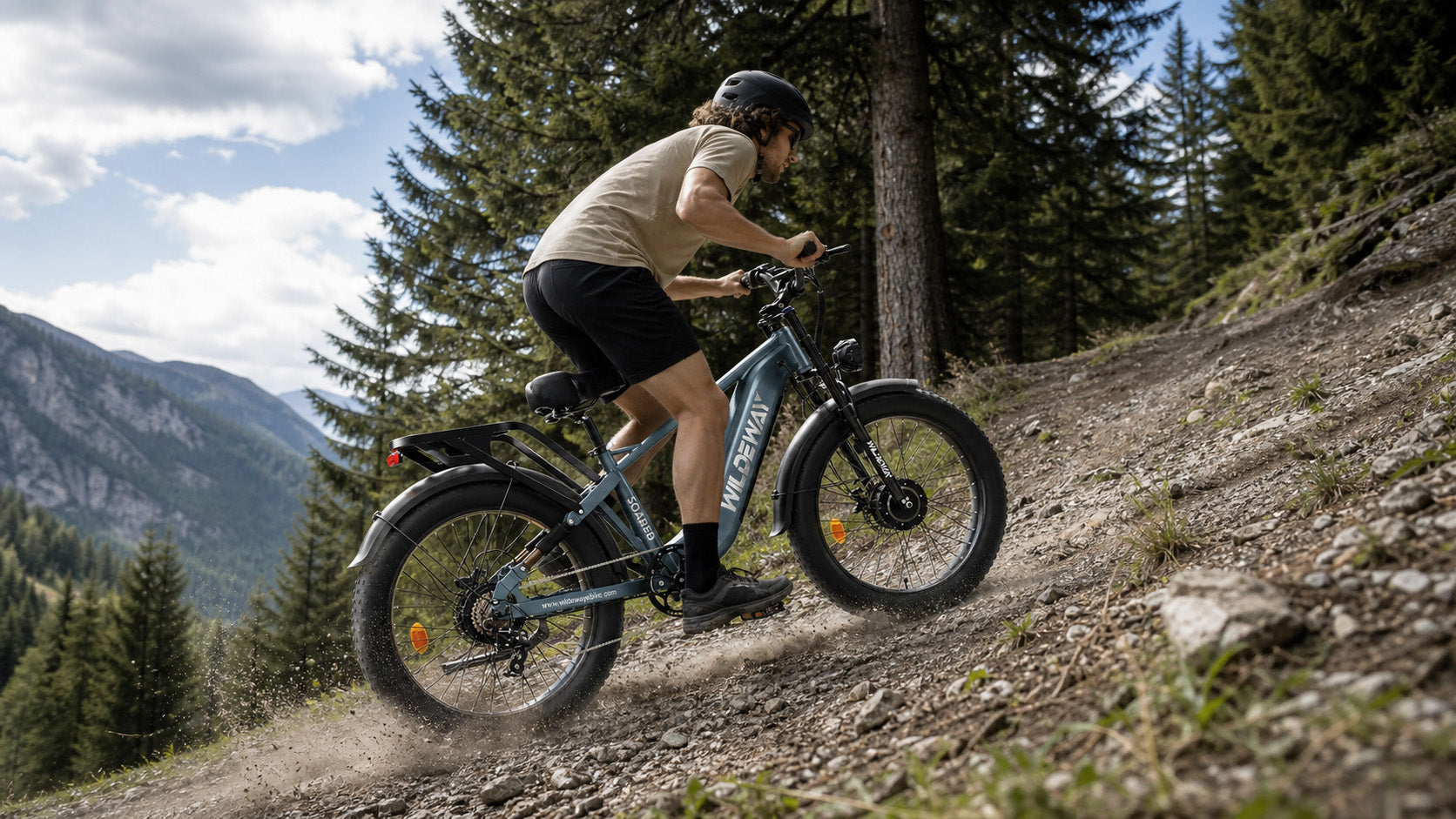
To truly conquer the wild, you need to ride smart. Here is the ultimate guide to mastering steep inclines using mechanical gears, All-Wheel Drive (AWD), and the right body positioning.
⚙️ 1. The Golden Rule: Shift Down Before You Climb
Many riders think: "I have an electric bike, why do I need to use the Shimano gears?"
The answer is Motor Efficiency. Hub motors work best when they are spinning at a healthy RPM (Revolutions Per Minute). If you hit a steep hill in your highest gear (Gear 7) and rely solely on the throttle, the motor will bog down, move slowly, and generate excessive heat.
- The Technique: As you approach a steep hill, use your right thumb to click the Shimano 7-speed derailleur down to Gear 1 or 2.
- Why it works: Gear 1 is your "granny gear." It is the easiest gear to pedal. By pedaling rapidly in a low gear, you send a signal to the pedal-assist system to deliver maximum torque, keeping the motors spinning happily and efficiently pulling you up the mountain.
⚡ 2. Maximize the AWD Advantage
When climbing loose gravel, wet grass, or muddy slopes, standard rear-wheel-drive bikes often fail. The rider leans forward, the rear wheel loses its grip, and the tire simply spins in the dirt.
- The Technique: Ensure your Dual Motor (AWD) mode is activated before hitting the steep stuff.
- Why it works: The WILDEWAY SOARED features motors in both the front and rear hubs. When the rear tire slips on a loose rock, the front motor bites into the ground and physically pulls the bike up and over the obstacle. AWD changes the geometry of climbing, preventing rear-wheel "spin-outs."
🚴♂️ 3. Body Positioning: Keep the Front Wheel Down
When you are climbing a very steep incline, gravity wants to pull the bike backward, which can cause the front wheel to lift off the ground (a "wheelie"). Not only is this dangerous, but on an AWD bike, lifting the front wheel means you lose 50% of your pulling power!
- The Technique: Stand up slightly or slide all the way to the tip of your saddle. Drop your chest and lean aggressively over the handlebars. Keep your elbows bent and tucked in. This forces your body weight over the front wheel, keeping it firmly planted on the ground so the front motor can maintain traction.
🛑 4. The "Hill Start" Dilemma: Pro vs. Max
Imagine this scenario: You are halfway up a brutal, rocky Alpine trail. You have to stop suddenly because a large branch is blocking the path. Now, you are parked on a 15-degree incline and need to start moving again.
This is the hardest maneuver in cycling. How your bike responds depends entirely on which version of the SOARED you own:
- If you have the SOARED Pro (Cadence Sensor): A cadence sensor requires you to turn the pedals about half a rotation before the motors kick in. On a steep hill, pushing the pedal that first half-turn using pure muscle is incredibly difficult. You will likely need to rely heavily on the thumb throttle to get the bike rolling before you can start pedaling.
- If you have the SOARED Max (Torque Sensor): This is where the Max earns its title as the ultimate climbing machine. The Torque sensor measures the pressure on the pedal, not the rotation. The absolute millisecond you step down hard on the pedal to start moving, the AWD system instantly blasts maximum power to both wheels. Zero delay. Zero rolling backward. It is an effortless, bionic launch straight up the hill.
(If you live in a mountainous region and frequently tackle technical trails, the Torque Sensor on the SOARED Max is a mandatory upgrade.)
⛰️ Ride Above the Rest
Mastering the uphill is a combination of man and machine. By shifting into a low gear, leaning over the handlebars, and letting the AWD system do the heavy lifting, hills are no longer obstacles—they are the best part of the ride.
Are you ready to stop pushing your bike up hills and start powering over them?
[Explore the WILDEWAY SOARED Series and find your ultimate climbing companion today.]
Teilen:
Why Fat Tires Are Safer on Wet and Slippery Roads: The Science of Grip
How to Pack for the Perfect Summer E-Bike Picnic | WILDEWAY