
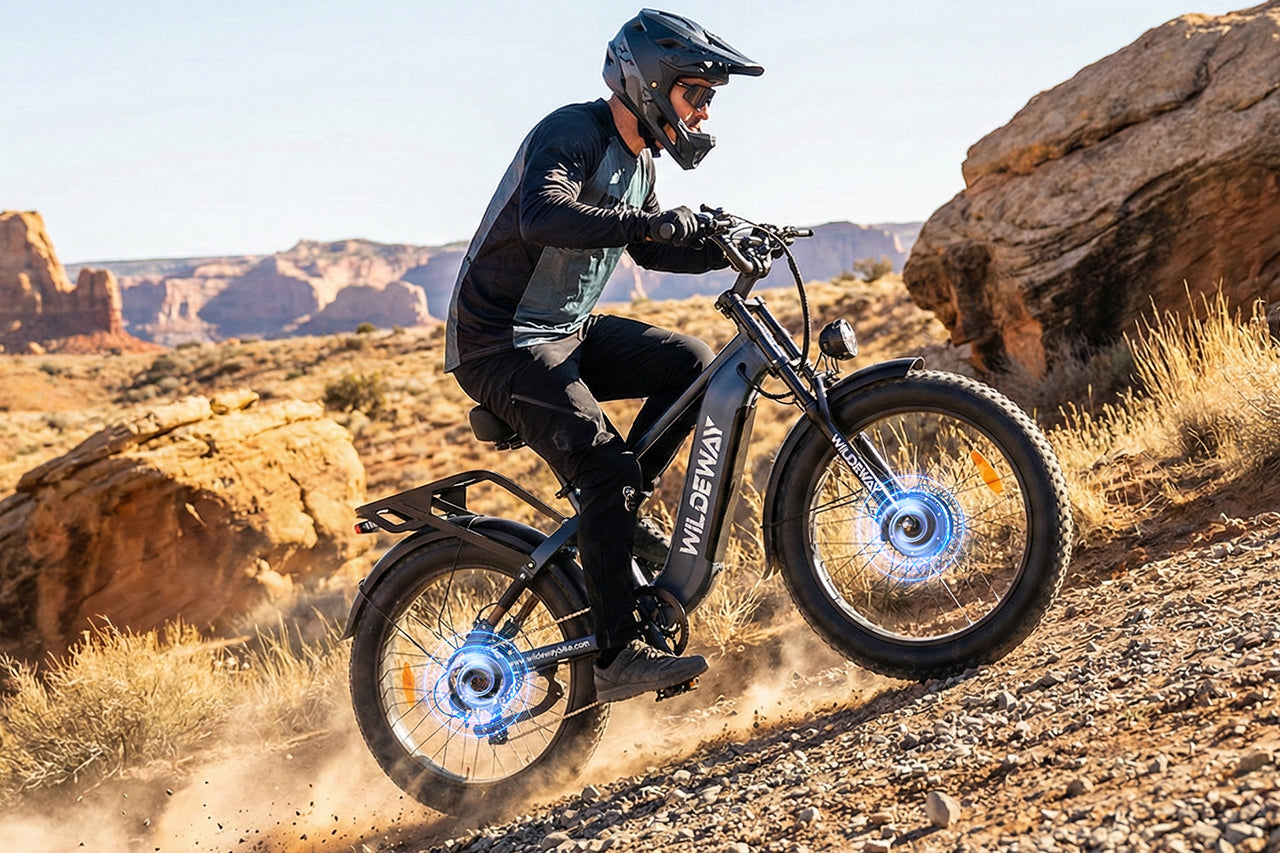
Dual Motor vs. Single Motor E-Bikes: The AWD Revolution Explained by Wildeway (2026 Guide)
For years, the e-bike industry has been in a power race, with brands boasting bigger, more powerful single motors. But a fundamental paradigm shift is happening, one that redefines what high performance truly means. This shift isn't just about adding more power; it's about adding more intelligence and control.
This is the dual-motor, All-Wheel-Drive (AWD) revolution, and it's at the very heart of our flagship, the Wildeway Soared.
Many people see "dual motor" and think it simply means "twice the power." While the Soared’s 2600W peak output is certainly immense, the true genius of the dual-motor system lies in something far more important: traction.
The Basics: From Rear-Wheel Drive to True All-Wheel Drive
Think about cars. For decades, most standard cars were two-wheel drive. But for navigating snow, mud, or demanding performance scenarios, All-Wheel Drive (AWD) became the gold standard. Why? Because delivering power to all four wheels provides vastly superior grip and control.
The exact same principle applies to e-bikes.
- A single, rear-hub motor e-bike is a "rear-wheel drive" vehicle. It pushes you from behind. This is fine for most situations, but has inherent limitations.
- A dual-motor e-bike like the Wildeway Soared is a true AWD vehicle. The rear motor pushes while the front motor pulls. This symbiotic relationship creates a level of performance that a single motor, no matter how powerful, simply cannot replicate.
Let's break down the four game-changing advantages this brings.
Advantage 1: Unmatched Traction (The AWD Effect)
This is the single greatest benefit. In challenging conditions, a single rear-motor bike will fail in one of two ways:
- On a steep climb: Too much power from the rear causes the front wheel to become light and lift off the ground, resulting in a loss of steering and control (a "wheelie").
- On a loose surface (mud, snow, wet leaves, gravel): Too much power from the rear causes the wheel to spin out, digging a hole and losing all momentum.
The Soared's AWD system solves both problems. The front motor is constantly pulling the front wheel down and forward, preventing the front end from lifting on climbs. Simultaneously, by distributing the power across two wheels, the chance of either one being overwhelmed and spinning out is dramatically reduced. You maintain constant grip and forward momentum, turning slippery surfaces from "no-go zones" into your playground.
Advantage 2: Phenomenal Climbing Power and Efficiency
Yes, the Soared has a staggering 136Nm of torque, but it's how it uses that torque that matters. A single motor trying to deliver that much power through one wheel is inefficient and difficult to control.
By splitting the workload, the dual-motor system can apply immense power to the ground more effectively. It's the difference between one person trying to push a heavy car, versus two people pushing from the front and back. The combined, coordinated effort is far more effective. This means you can conquer steeper hills, and do so more efficiently, without the bike feeling like it's trying to tear itself apart.
Advantage 3: Superior Balance, Stability, and Handling
Bike handling is all about balance. Many powerful single-motor e-bikes place a very heavy motor in the rear hub. This creates a significant rearward weight bias, which can make the bike feel unbalanced in corners and less stable at speed.
The Wildeway Soared distributes the weight of the motors between the front and rear wheels. This creates a more centered, planted feel. The bike feels more stable when descending, more predictable when cornering, and generally more confidence-inspiring. The front wheel feels securely connected to the trail, giving you precise steering feedback.
Advantage 4: Is a Dual Motor Always Better?
To be completely honest, no. For certain applications, a high-quality single motor is the perfect choice.
If your primary needs are light weight, maximum portability, and casual city commuting on paved surfaces (the world of our Wildeway Torpedo), a single motor is more than sufficient and more efficient.
But if your mission involves any of the following, a dual-motor system is not a luxury—it's a necessity:
- Riding in snowy or icy winter conditions.
- Navigating muddy farm tracks or wet forest trails.
- Tackling extremely steep off-road climbs.
- Hauling heavy loads or towing a trailer.
- Demanding the absolute highest level of stability and safety at speed.
Conclusion: It's Not More Power, It's Smarter Power
The dual-motor AWD system in the Wildeway Soared represents the pinnacle of current e-bike performance technology. It's a thoughtful, engineering-driven solution that understands that raw power is useless without the ability to control it and effectively transfer it to the ground.
It offers a revolutionary level of grip, safety, and all-terrain capability that opens up a new world of possibilities for the serious rider. It’s the confidence to know that wherever you point your handlebars, your bike has the traction and the power to take you there.
Have you ever experienced the difference an AWD system makes, either on a car or a bike? Share your thoughts on this technology in the comments!
Partager:
The "Two-Bike Solution": Why You Need a Soared AND a Torpedo (2026)
Fat Tire Pressure Guide: Unlock Your E-Bike's True Potential (2026)