
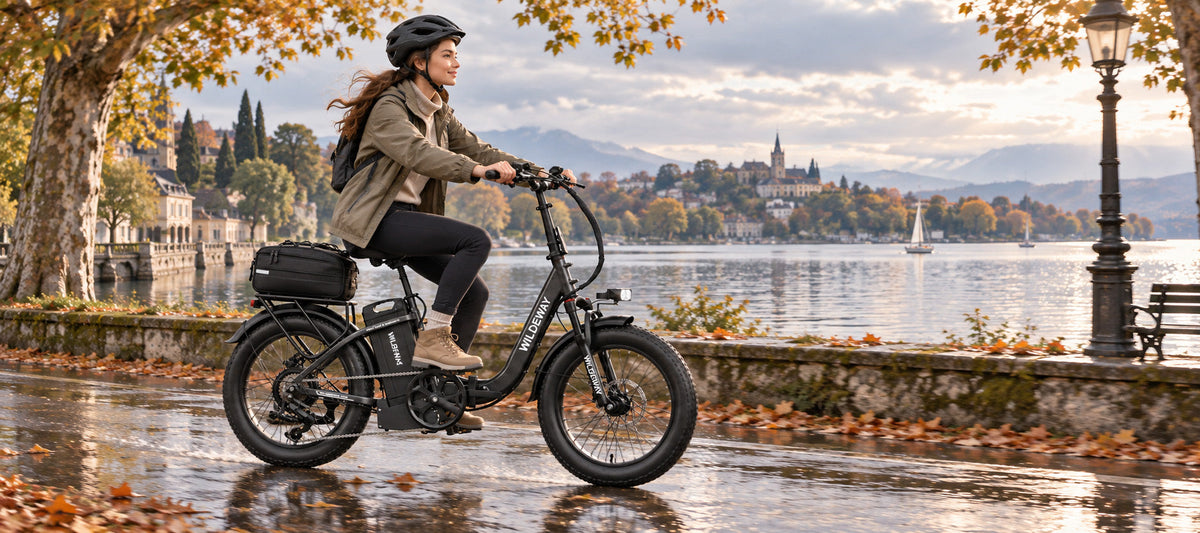
Autumn E-Bike Commuting in Europe: 9 Essential Tips
The best way to prepare an e-bike for autumn commuting is to check the tyres, brakes and lights, protect the battery from prolonged cold and moisture, wear visible weather-resistant clothing, and allow extra stopping distance on wet roads. A practical setup matters more than riding faster: good visibility, predictable handling and enough battery reserve make everyday journeys safer and less stressful.
Autumn is one of the most rewarding seasons for cycling in Europe. Busy summer routes become quieter, city parks turn gold, and cooler temperatures make longer rides more comfortable. However, shorter daylight hours, fallen leaves, rain and changing temperatures require a different routine from summer riding.
Whether you commute through Berlin, cycle along a canal in Amsterdam or connect a suburban home with a railway station, these nine tips can help you keep riding confidently throughout the season.
1. Inspect Your E-Bike Before the Weather Changes
Do not wait for the first cold, wet morning to discover that a brake pad is worn or a light is not working.
Start autumn with a basic inspection:
-
Check that both tyres are free from cuts, embedded glass and excessive wear.
-
Test the front and rear brakes separately.
-
Confirm that the brake rotors are clean and straight.
-
Check the front light, rear light and reflectors.
-
Make sure the battery locks securely into position.
-
Inspect the folding mechanism and confirm that every latch closes firmly.
-
Lubricate the chain with a product suitable for damp conditions.
-
Tighten loose rack, mudguard and handlebar fasteners.
If anything feels unfamiliar—especially the brakes, steering or folding latch—ask a qualified bicycle technician to inspect it. A five-minute check at home is useful, but it is not a replacement for professional servicing when a safety-critical component is damaged or badly worn.
2. Adjust Your Riding for Wet Leaves and Painted Surfaces
Wet leaves can behave like a slippery layer between the tyre and the road. Painted lane markings, metal covers, tram rails and polished cobblestones may also offer less grip when wet.
The safest response is smooth, predictable riding:
-
Reduce speed before entering a corner.
-
Keep the bicycle more upright while turning.
-
Avoid sudden steering movements.
-
Apply both brakes progressively.
-
Increase the distance between you and the rider or vehicle ahead.
-
Cross rails at a safer angle where conditions allow.
-
Avoid hard acceleration on leaves, gravel or painted markings.
The 20×3.0-inch tyres used on the WILDEWAY FW11S 3.0 Pro provide a broader contact area than narrow city-bike tyres. This can support stability and comfort on mixed urban surfaces, but no tyre can eliminate the risk of slipping. Riding technique remains essential.
Always use the tyre pressure range printed on the tyre sidewall or stated in the product manual. Excessively low pressure can make steering vague and increase the risk of tyre or rim damage, while excessive pressure may reduce comfort and grip on uneven surfaces.
3. Make Visibility Part of Every Journey
Autumn visibility can change quickly. A journey that begins in daylight may end after sunset, while rain and low cloud can make riders harder to see even in the afternoon.
The European Commission identifies lighting and reflective equipment as important elements of bicycle visibility. It also notes that bicycle equipment requirements can vary between countries, so riders should check the rules that apply where they live and travel.
Before each ride:
-
Confirm that the headlight illuminates correctly.
-
Check the rear light and braking indication.
-
Keep lenses and reflectors clean.
-
Use reflective details on your jacket, bag or helmet.
-
Avoid covering the rear light with luggage.
-
Carry a backup light if you regularly ride after dark.
The FW11S 3.0 Pro includes a front light and a rear lighting system with braking indication and turn signals. These integrated features can support visibility, but riders should still make eye contact with other road users and signal their intentions clearly. Technology should reinforce safe behaviour, not replace it.
4. Check Brakes More Frequently in Wet Conditions
Rain, road dirt and leaf residue can affect braking feel. Stopping distances may increase, while contamination on the brake rotors can produce noise or inconsistent performance.
The FW11S 3.0 Pro is equipped with front and rear hydraulic disc brakes and 180mm rotors. Hydraulic braking can provide strong, controlled stopping with relatively little hand effort, which is useful for frequent urban stops. Nevertheless, the system still requires regular inspection.
Before entering traffic, test the brakes at low speed. If a lever pulls unusually close to the handlebar, the bicycle pulls to one side, or braking performance changes suddenly, stop riding and have the system checked.
Do not touch the braking surfaces with oily hands, and do not spray general-purpose lubricant near the discs. After a particularly wet or dirty journey, wipe the bicycle down and allow it to dry in a ventilated area.
5. Plan Battery Range with a Sensible Reserve
Temperature, rider weight, tyre pressure, elevation, wind, assistance level and frequent starting can all affect real-world range. Cooler conditions may temporarily reduce the performance available from a lithium-ion battery, so an autumn range plan should include more reserve than a summer plan.
The FW11S 3.0 Pro uses a removable 48V 35Ah battery with a stated capacity of 1,680Wh. WILDEWAY publishes a maximum pedal-assist range of up to 120km, but this is not a guaranteed distance for every journey. Real-world results will vary.
A practical commuting routine is to:
-
Begin longer journeys with a comfortably charged battery.
-
Avoid planning a route that uses 100% of the estimated range.
-
Use a lower assistance level on flat, easy sections.
-
Select an appropriate mechanical gear when starting or climbing.
-
Maintain the recommended tyre pressure.
-
Bring the approved charger only when charging at the destination is permitted.
-
Review battery use after several typical journeys and plan around your own data.
Bosch eBike Systems similarly identifies temperature, riding mode, cadence, stopping frequency, tyre pressure, weight and terrain as factors that influence e-bike range. Although recommendations for one battery system should not replace the WILDEWAY manual, the general principle is useful: range is a result of conditions and riding behaviour, not battery capacity alone.
6. Protect the Battery from Prolonged Cold and Moisture
An e-bike can be used in changing weather, but the battery should not be neglected after the ride.
If your battery is removable, bring it indoors when the bicycle will remain parked in a very cold location for an extended period. Let a cold battery reach an appropriate indoor temperature before charging, and always follow the temperature limits and charging instructions in the WILDEWAY manual.
Choose a dry, ventilated charging location away from flammable materials. Use the approved charger and inspect the battery, charger and cables regularly. Stop using the equipment and contact support if you notice impact damage, swelling, unusual heat, a damaged connector or an unfamiliar smell.
Avoid directing a pressure washer at the battery, motor, display, wiring or bearings. A damp cloth and bicycle-appropriate cleaning products are usually better choices for routine cleaning.
7. Use the Step-Through Frame to Your Advantage
A step-through frame is useful throughout the year, but its benefits become particularly noticeable in autumn.
Bulky jackets, waterproof trousers and loaded bags can make it more difficult to swing a leg over a high top tube. The low-entry aluminium frame of the FW11S 3.0 Pro allows riders to mount and dismount with a smaller leg movement.
This can be helpful for:
-
Riders wearing heavier seasonal clothing.
-
Commuters making frequent stops.
-
People carrying luggage on the rear rack.
-
Riders who prefer a more accessible mounting position.
-
Anyone stopping on uneven or slippery ground.
The design does not remove the need for balance and safe technique. When mounting, keep at least one brake applied, make sure the assistance system will not activate unexpectedly and begin in a suitable gear.
8. Pack for Changing European Weather
European autumn weather can shift within a single journey. Instead of wearing one very heavy layer, use several lighter layers that can be adjusted.
A useful commuting kit may include:
-
A breathable waterproof outer jacket.
-
Full-finger gloves with good grip.
-
Clear or low-light cycling glasses.
-
A helmet that fits securely over thin headwear.
-
A waterproof bag cover.
-
A compact cloth for cleaning lights and the display.
-
A small tyre repair kit and pump.
-
A fully charged phone.
-
An emergency contact card.
Keep luggage balanced and securely attached. The FW11S 3.0 Pro includes a rear rack, making it possible to carry a properly fitted rack bag or panniers rather than placing all the weight on the rider’s shoulders.
Do not allow loose straps to hang near the wheel, chain or brake rotor. After loading the rack, confirm that the rear light remains visible.
9. Create a Five-Minute Weekly Routine
Consistency is more valuable than waiting for a problem to appear. Set aside five minutes each week for an autumn check:
Tyres
Look for damage and check the pressure.
Brakes
Test both brakes and inspect the pads and rotors.
Lights
Clean the lenses and confirm that all functions operate.
Battery
Inspect the case and contacts, then review your recent energy use.
Drivetrain
Clean the chain and apply suitable lubricant when needed.
Folding points
Inspect the frame and handlebar folding latches for correct engagement.
Accessories
Check the rack, mudguards, kickstand and luggage attachments.
This short routine can help identify small issues before they interrupt a commute.
Why the FW11S 3.0 Pro Fits Autumn Commuting
A practical autumn e-bike needs to balance comfort, range, accessibility and everyday utility.
The FW11S 3.0 Pro combines a low step-through aluminium frame with a folding design, 20×3.0-inch tyres, a 65mm front suspension fork, hydraulic disc brakes, integrated lighting and a rear rack. Its removable 1,680Wh battery is designed for riders who want generous capacity for commuting and longer leisure journeys.
The folding structure can also help households with limited storage space. However, the complete bicycle weighs approximately 33kg, so riders should measure their storage area and consider how they will lift or transport it before purchasing.
Specifications, permitted configurations and public-road requirements may differ by market. Riders should confirm the local version, read the supplied manual and follow the traffic and equipment regulations of the country in which the bicycle is used.
Final Thoughts
Autumn does not have to mark the end of the cycling season. With clean lights, reliable brakes, correctly maintained tyres, sensible battery planning and suitable clothing, an e-bike can remain a practical part of everyday European life.
The most important preparation is not a complicated upgrade. It is a repeatable routine: inspect the bicycle, check the forecast, plan enough battery reserve and ride smoothly for the conditions.
If you are looking for an accessible folding design with a large removable battery and practical commuter equipment, explore the WILDEWAY FW11S 3.0 Pro.
Frequently Asked Questions
Is a step-through e-bike suitable for autumn commuting?
Yes. A step-through frame can make mounting and dismounting easier when wearing waterproof trousers, a long jacket or carrying luggage. It is also convenient for riders who make frequent stops during an urban commute.
Do e-bike batteries lose range in cooler weather?
Available range may temporarily decrease as temperatures fall. The actual change depends on the battery, temperature, route, assistance level, tyre pressure and total load. Keep a sensible range reserve and follow the manufacturer’s charging and storage instructions.
Are wider tyres safer on wet leaves?
Wider tyres can provide comfort and a larger contact area, but they cannot guarantee grip. Wet leaves, paint, metal and cobblestones can still be slippery. Reduce speed, brake smoothly and keep the bicycle upright through corners.
How often should I check my e-bike brakes in autumn?
Perform a brief function check before every ride and a closer visual inspection each week. Arrange professional servicing if braking power changes, the lever feels unusual, the pads appear worn or the system develops persistent noise.
Can I wash an e-bike after riding in the rain?
Yes, but avoid high-pressure water around the battery, motor, display, wiring and bearings. Remove loose dirt carefully, use a damp cloth or appropriate bicycle-cleaning products, and let the bicycle dry in a ventilated area.
What should I carry on an autumn e-bike commute?
Carry weather-resistant clothing, a charged phone, a small repair kit, a pump, a backup light and a secure waterproof bag. For longer journeys, bring enough water and confirm that you have sufficient battery reserve.
Share:
The Ultimate Campervan Companion: Why E-Bikes Are Redefining European Motorhome Travel
How to Plan a 20–40 km E-Bike Commute in Europe