
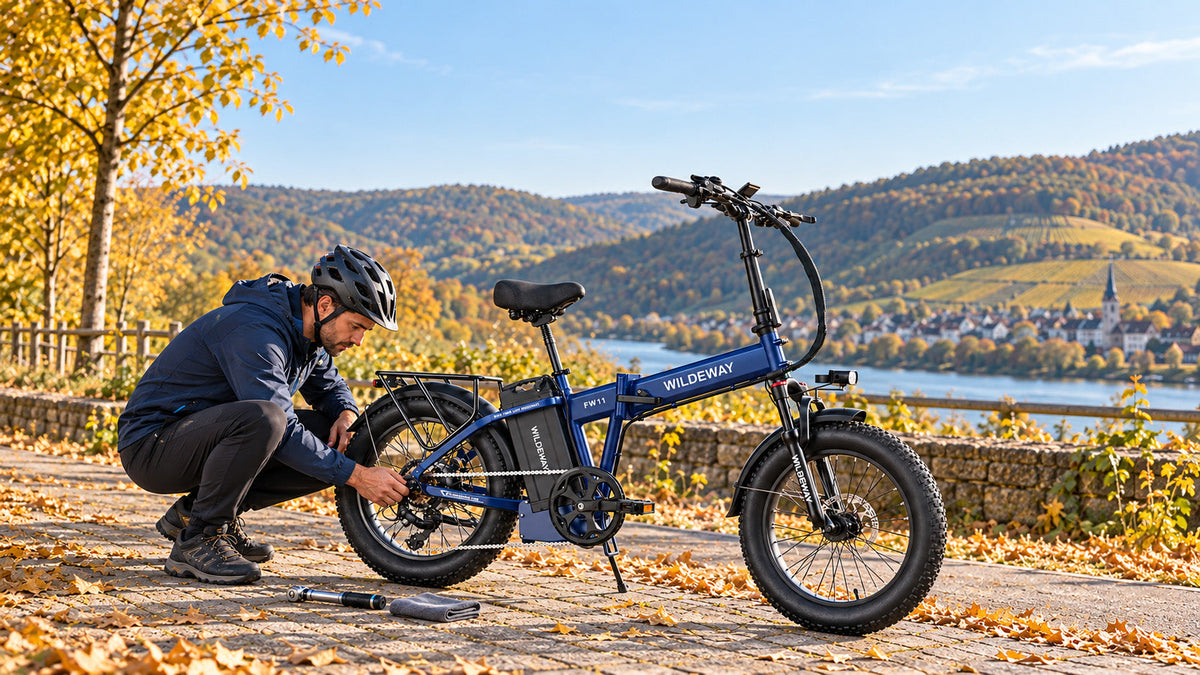
Why Is My E-Bike Making Noise? 9 Common Sounds Explained
A new noise from an e-bike does not automatically mean that an expensive component has failed. A clicking sound may come from a loose accessory, a squeak may come from a dry chain and a light scraping noise may result from a slightly misaligned brake caliper.
However, some noises can indicate a loose wheel, damaged brake rotor, worn drivetrain component, motor problem or possible frame damage.
The safest approach is not to guess based on the sound alone. Pay attention to exactly when it occurs:
-
Only while pedalling.
-
Only while using motor assistance.
-
Once per wheel revolution.
-
When applying the brakes.
-
When turning the handlebar.
-
When riding over bumps.
-
When sitting on the saddle.
-
Continuously, even when coasting.
This guide explains nine common e-bike noises, what may cause them and when the bicycle should be inspected professionally.
First: Stop Riding If the Bicycle Feels Unsafe
Stop in a safe location if a new noise is accompanied by:
-
Reduced braking performance.
-
A brake lever pulling unusually close to the handlebar.
-
A visibly damaged brake rotor.
-
A loose or misaligned wheel.
-
Sudden motor power loss.
-
A burning smell.
-
Smoke or unusual heat.
-
A damaged battery casing.
-
Electrical error messages.
-
Unstable steering.
-
A crack in the frame or fork.
-
Grinding from a wheel bearing or motor.
-
A component moving when it should remain fixed.
Switch off the electrical system and do not continue riding simply to see whether the noise disappears.
A minor loose accessory may be easy to correct. A damaged brake, wheel, frame, battery or electrical component requires a different level of caution.
How to Locate an E-Bike Noise
Sounds travel through an aluminium frame, so the place where you hear a noise may not be its actual source.
Before adjusting anything, ask five questions.
1. Does the sound occur while pedalling?
If the noise stops when you stop pedalling, inspect the pedals, crank, chain, chainring, cassette and derailleur area.
2. Does it occur only with motor assistance?
Compare the bicycle at low speed with assistance switched off and then at a low assistance level, provided it is safe to do so.
A noise that occurs only under motor power may require inspection of the motor, mounting hardware, wheel or electrical drive system.
3. Does it repeat with wheel rotation?
Lift and rotate each wheel only if the bicycle can be supported safely. A repeating scrape or click may involve the tyre, mudguard, brake rotor, spoke, wheel magnet or another component close to the wheel.
Keep fingers, clothing and tools away from moving spokes and brake rotors.
4. Does it happen over bumps?
A noise over rough ground may come from a rack, mudguard, battery mounting mechanism, kickstand, folding joint, light, cable or loose accessory.
5. Does braking change the sound?
If a sound appears or becomes stronger when a brake is applied, inspect the relevant brake before riding again.
Record a short video if the sound is difficult to reproduce. A clear recording showing when the noise occurs may help a qualified technician diagnose the problem.
1. Clicking While Pedalling
A regular click that follows the pedalling rhythm commonly comes from the drivetrain or another component that moves under rider load.
Possible causes include:
-
A pedal that is loose or damaged.
-
A loose crank arm.
-
A worn pedal bearing.
-
Chainring movement.
-
A worn or damaged chain link.
-
Incorrect derailleur indexing.
-
A chain contacting the front chainring guard.
-
A bottom-bracket problem.
-
A saddle or seatpost moving as the rider pedals.
Try pedalling while standing briefly in a safe, traffic-free area. If the noise disappears when your weight leaves the saddle, the saddle rails, clamp or seatpost may be involved.
If the clicking remains, the pedals, cranks and drivetrain become more likely sources.
Do not tighten crank, pedal or chainring components without the correct tool and manufacturer’s torque specification. Overtightening can damage threads or lightweight components, while insufficient tightening can allow further movement.
2. Chain Skipping or Clattering
A chain that clatters, jumps between gears or feels as though it briefly loses engagement may have an adjustment or wear problem.
Possible causes include:
-
Incorrect derailleur indexing.
-
A bent derailleur hanger.
-
A stiff or damaged chain link.
-
A worn chain, cassette or chainring.
-
Dirt in the drivetrain.
-
Incorrect gear selection under heavy load.
-
A damaged derailleur.
-
A chain that is too loose or incorrectly sized.
An e-bike motor can increase the load passing through the drivetrain. Avoid changing gear while applying maximum pedal pressure or strong motor assistance.
Reduce pressure on the pedals momentarily while shifting. This gives the chain a better opportunity to move between sprockets smoothly.
If the chain repeatedly skips under load, stop using high assistance and arrange an inspection. A chain that comes off unexpectedly can damage nearby components or affect the rider’s balance.
3. Brake Squeal
Disc brakes can occasionally make noise after rain or when cold and wet. A brief sound that disappears as the braking surfaces dry is different from persistent squealing combined with reduced braking power.
Possible causes include:
-
Water on the rotor.
-
Dirt or road residue.
-
Contaminated brake pads.
-
Contaminated rotors.
-
Glazed pads.
-
Worn pads.
-
Incorrect caliper alignment.
-
A damaged or distorted rotor.
-
Incorrect bedding-in of new pads.
Never apply chain lubricant, grease or general-purpose spray to a brake rotor or brake pad.
If braking performance has changed, the rotor is visibly damaged or the lever feels abnormal, stop riding. Brake service is not an area for trial-and-error repairs.
4. Rhythmic Brake-Rotor Scraping
A light metallic scrape that appears once during each wheel revolution can indicate that the rotor is contacting a brake pad at one point.
Possible causes include:
-
A slightly distorted rotor.
-
Caliper misalignment.
-
Wheel installation that is not fully seated.
-
Loose or incorrectly installed axle hardware.
-
Dirt around the caliper.
-
Bearing movement.
-
Damage following transport or impact.
First confirm that the wheel is correctly installed according to the bicycle manual. Do not attempt to bend a rotor by hand while it is fitted to the bicycle.
A rotor that is cracked, severely distorted or accompanied by poor braking should be inspected before the bicycle is ridden again.
5. Creaking Under Pedal Pressure
Creaking may appear when climbing, accelerating or pushing harder on the pedals.
Potential sources include:
-
Pedal threads.
-
Crank connections.
-
Bottom-bracket interfaces.
-
Chainring fasteners.
-
Saddle rails.
-
Seatpost movement.
-
Loose rack hardware.
-
Wheel spokes.
-
Frame joints.
-
A folding mechanism.
Because sound travels through the frame, a creak that appears to come from the crank may actually originate at the saddle, rear rack or wheel.
Inspect the bicycle systematically. Avoid applying lubricant randomly to every joint. Some components require grease, some require thread-locking compound, and others must remain completely dry.
A creaking sound from a frame weld, fork or structural joint requires immediate attention. Stop riding if a crack, separation or unusual movement is visible.
6. Rattling Over Bumps
Rattling is common when a bicycle carries several accessories, but it should still be investigated.
Check:
-
Battery mounting and locking mechanism.
-
Battery-port cover.
-
Keys left in the lock.
-
Rear rack hardware.
-
Mudguards.
-
Kickstand.
-
Front and rear lights.
-
Display mount.
-
Cable guides.
-
Bell.
-
Bottle cage.
-
Folding latch.
-
Cargo straps.
-
Items inside a pannier or storage bag.
Remove detachable accessories one at a time and repeat a slow test over the same surface. This can help isolate the source.
Do not ignore movement from the battery mounting mechanism. The battery should sit securely according to the manufacturer’s instructions and should not be forced into position.
7. Clicking or Pinging from a Wheel
A repeating click or metallic ping from a wheel may involve:
-
Loose or unevenly tensioned spokes.
-
A spoke contacting another spoke.
-
A damaged spoke.
-
The valve or valve nut.
-
A tyre object contacting the frame or mudguard.
-
A loose wheel magnet or sensor component.
-
A wheel bearing.
-
Axle hardware.
-
A brake rotor.
Do not attempt to tighten individual spokes randomly. Spoke tension must remain balanced across the wheel, and an incorrect adjustment can make the wheel less true.
Hub-motor wheels may also contain electrical cables, special axle washers and torque hardware. If a motor wheel needs to be removed, follow the model-specific instructions or use a qualified e-bike technician.
8. Knocking When Braking or Turning
A knock felt through the handlebar may come from the headset, stem, handlebar, fork or front brake area.
Possible causes include:
-
Headset play.
-
Loose stem hardware.
-
Handlebar movement.
-
Brake-caliper movement.
-
Front-wheel movement.
-
Fork bushing play.
-
Loose rack or front accessory hardware.
With the motor switched off, apply the front brake and gently rock the bicycle forwards and backwards. Movement or knocking around the headset, fork or front axle requires inspection.
Do not continue riding if the handlebar, stem, wheel or fork moves independently in a way that it should not.
Steering hardware must be tightened in the correct order and to the specified torque. Simply tightening every visible bolt as hard as possible can damage the components.
9. Motor Whine, Grinding or Irregular Noise
Electric motors naturally produce some sound. The pitch may change with speed, assistance level and load.
A consistent motor hum that has been present since the bicycle was new may be normal. A new grinding, knocking or irregular sound is different.
Possible causes include:
-
The motor operating under unusually high load.
-
A loose motor-wheel axle.
-
Brake or tyre contact mistaken for motor noise.
-
Wheel-bearing wear.
-
Internal motor damage.
-
Damaged motor cabling.
-
Water or impact damage.
-
An electrical control problem.
Note whether the noise occurs:
-
With assistance switched off.
-
At every assistance level.
-
Only during acceleration.
-
Only while climbing.
-
At a particular wheel speed.
-
After riding through water or after an impact.
-
Together with an error message or power interruption.
Do not open a motor casing, controller or battery. These components require correct diagnostic equipment, procedures and replacement parts.
If the motor becomes unusually hot, loses power, produces a burning smell or makes a harsh grinding sound, switch off the system and arrange professional inspection.
What About Suspension Squeaks?
Suspension components can produce sounds when dust or dirt accumulates around moving surfaces, but a squeak can also indicate wear or damage.
Inspect:
-
Exposed fork stanchions.
-
Suspension seals.
-
Mounting hardware.
-
Rear-shock attachment points.
-
Visible leakage.
-
Scratches or impact damage.
-
Abnormal sideways movement.
Clean exposed surfaces with a soft cloth. Do not apply an unknown lubricant or household oil to suspension seals.
Follow the suspension manufacturer’s service instructions. A leaking, damaged or loose suspension component should be inspected before demanding riding.
A Safe Ten-Minute Noise Check
Before arranging service, you can collect useful information without dismantling the e-bike.
-
Switch off the electrical system.
-
Check the frame and fork for visible damage.
-
Confirm that both wheels appear correctly installed.
-
Inspect the tyres and brake rotors.
-
Check the battery mounting mechanism.
-
Remove loose objects from bags and racks.
-
Rotate each wheel using safe support.
-
Turn the handlebar slowly from side to side.
-
Press each brake lever separately.
-
Record when and where the sound occurs.
Do not perform a test ride if braking, steering, wheel retention, battery condition or frame integrity is uncertain.
When Should You Visit an E-Bike Technician?
Arrange professional inspection when:
-
You cannot identify the source.
-
The noise is becoming louder.
-
The bicycle has recently crashed or fallen.
-
Braking performance has changed.
-
The wheel, crank or steering system has play.
-
The frame or fork may be damaged.
-
The battery or motor is unusually hot.
-
Electrical error codes appear.
-
Motor assistance cuts in and out.
-
The motor produces grinding or knocking.
-
A repair requires opening an electrical component.
-
Correct torque values or specialist tools are unavailable.
A technician will find the problem more easily if you can describe the conditions under which it occurs.
Useful information includes:
-
The type of sound.
-
Approximate location.
-
Bicycle speed.
-
Selected gear.
-
Assistance level.
-
Whether you were pedalling, braking or coasting.
-
Recent cleaning, transport, impact or repair work.
-
Any display warning or change in motor performance.
Listen to Changes, Not Just Volume
Some normal e-bike sounds are louder than those of a conventional bicycle. A hub motor may produce a gentle hum, wide tyres may sound different on different surfaces and disc brakes may briefly make noise when wet.
The more important question is whether the sound is new or has changed.
A quiet new click can be more significant than a familiar motor hum. Investigate new sounds early, before a loose component causes additional wear.
Applying This Guide to the WILDEWAY FW11 Pro
The WILDEWAY FW11 Pro combines electrical, drivetrain, folding and load-carrying components within one bicycle. This means a noise may come from an ordinary bicycle component, an accessory, the folding structure or the electric drive system.
When investigating a noise:
-
Switch off assistance before touching moving parts.
-
Check the battery mounting and folding mechanism.
-
Keep lubricant away from the brake rotors.
-
Do not pull or twist motor wiring.
-
Follow the manual for wheel and axle procedures.
-
Use the specified torque values.
-
Seek professional help for motor, battery or controller faults.
Never assume that an unfamiliar electrical noise is normal simply because the motor still provides assistance.
Final Thoughts
An e-bike communicates through changes in sound and feel. Clicking, squeaking and rattling are not always signs of a serious failure, but they should not be dismissed without checking their source.
Begin by identifying exactly when the sound occurs. Separate pedalling, braking, wheel rotation, motor assistance and rough-surface conditions. Inspect simple external components first and avoid dismantling safety-critical or electrical systems without the correct knowledge.
Stop riding immediately when a noise is accompanied by weak braking, unstable steering, wheel movement, frame damage, electrical problems, abnormal heat, smoke or a burning smell.
Finding a small problem early can prevent more extensive damage and help keep every journey safer.
Frequently Asked Questions
Is it normal for an e-bike motor to make noise?
A consistent electric hum may be normal, particularly under acceleration or load. A new grinding, knocking or irregular sound should be investigated.
Why does my e-bike click when I pedal?
Possible causes include the pedals, crank, chain, chainring, bottom bracket, saddle or seatpost. The timing of the click can help identify the source.
Why do my e-bike brakes squeal?
Water, contamination, worn pads, incorrect alignment or rotor damage may cause brake noise. Stop riding if braking performance has changed.
Can a loose battery make a rattling sound?
Yes. A battery or battery cover that is not seated correctly may rattle over uneven ground. Inspect the mounting mechanism and follow the manufacturer’s instructions.
Should I lubricate a squeaking e-bike?
Only after identifying the component and confirming which lubricant is appropriate. Never apply lubricant to brake rotors or brake pads.
When should I stop riding because of a noise?
Stop if the sound is accompanied by weak braking, loose steering, wheel movement, frame damage, grinding, electrical errors, abnormal heat, smoke or a burning smell.
Can I open the motor to find the source of a noise?
No. Motor, controller and battery work should be performed using the correct procedures and diagnostic equipment. Contact an appropriately qualified e-bike technician.
Share:
27.5” Trail E-MTB vs. 26x4.0 Fat Tire: Choosing the Ultimate Full-Suspension E-Bike for European Terrain
Low-Light E-Bike Riding in Europe: Autumn Safety Guide