
News
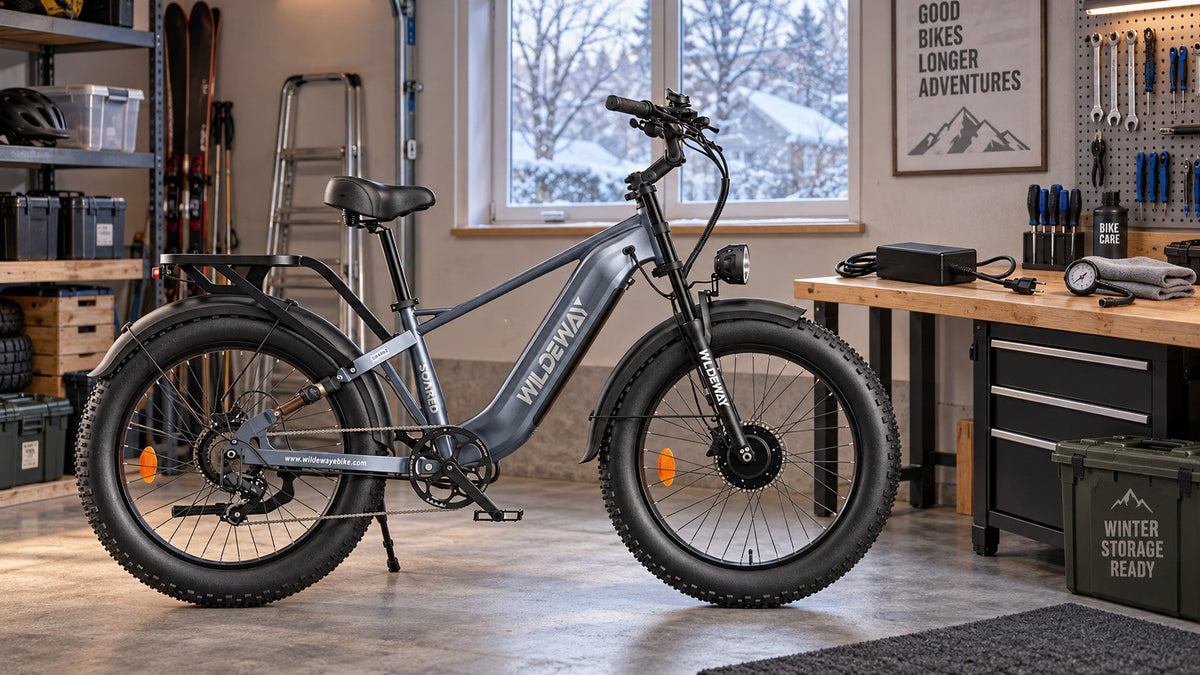
How to Store an E-Bike for Winter: Complete Checklist
Cold, moisture and months of inactivity can affect an e-bike’s battery, tyres, brakes and electrical connections. This practical winter storage guide explains how to clean the bicycle, protect the removable battery, select a safe storage location and prepare the bike for its first spring ride.
Read moreabout How to Store an E-Bike for Winter: Complete Checklist
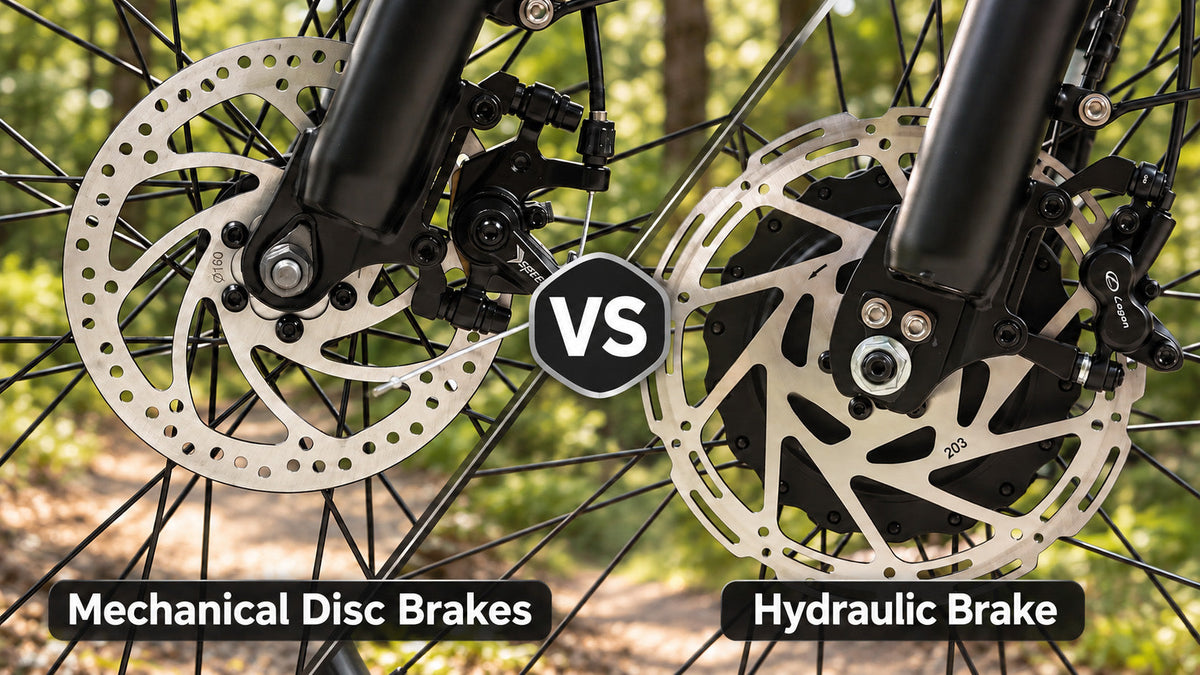
Hydraulic vs Mechanical Disc Brakes on E-Bikes: Which Is Better?
Hydraulic and mechanical disc brakes may look similar, but they deliver different lever feel, adjustment requirements and maintenance experiences. This guide explains how each system works and which may be more suitable for urban commuting, cargo use or all-terrain e-bike riding.
Read moreabout Hydraulic vs Mechanical Disc Brakes on E-Bikes: Which Is Better?
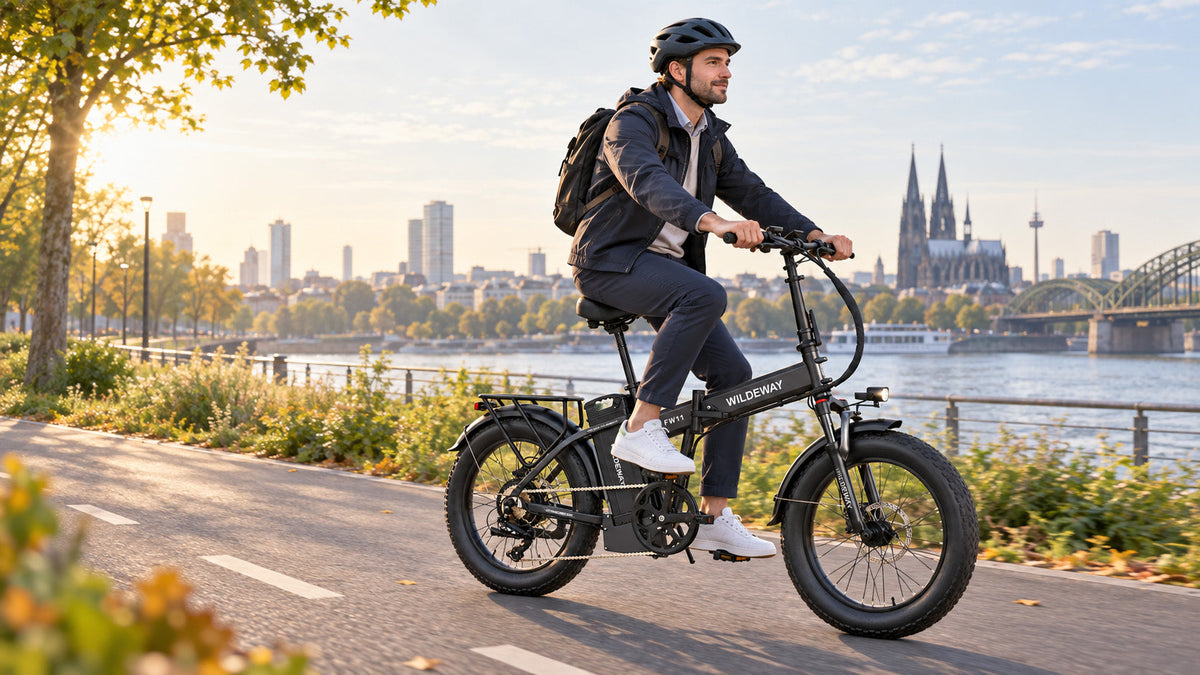
How to Plan a 20–40 km E-Bike Commute in Europe
A 20–40 km daily e-bike commute is realistic when the route, battery capacity, comfort, storage and charging plan work together. This guide explains how European commuters can calculate their range needs, choose practical equipment and build a reliable routine for longer everyday journeys.
Read moreabout How to Plan a 20–40 km E-Bike Commute in Europe
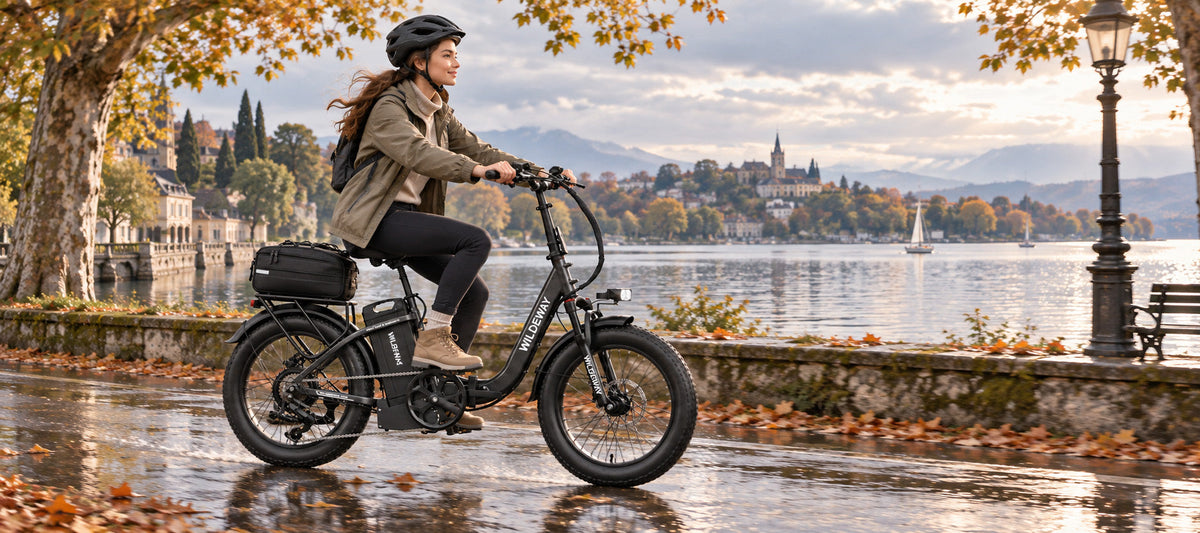
Autumn E-Bike Commuting in Europe: 9 Essential Tips
As darker mornings, wet roads and cooler temperatures return, a few simple checks can make autumn e-bike commuting safer and more comfortable. This practical European guide covers tyres, brakes, lighting, battery care, clothing and route planning—with advice for riders using a step-through folding e-bike.
Read moreabout Autumn E-Bike Commuting in Europe: 9 Essential Tips

The Ultimate Campervan Companion: Why E-Bikes Are Redefining European Motorhome Travel
In Europe, exploring the countryside, lakes, and coastlines by campervan (or RV/motorhome) has become one of the most popular outdoor lifestyles. However, driving large recreational vehicles comes with a significant drawback: once parked at a campsite, these vehicles struggle to navigate the narrow alleys of historic European towns, winding mountain paths, or restricted city centers. This article explores how e-bikes are revolutionizing the European campervan travel experience, enabling seamless exploration within a 30-to-50-kilometer radius of the campsite. It compares two ideal companions for campervans: the Wildeway TORPEDO—a 250W, EU-compliant, full-suspension folding e-bike with a low step-through frame that fits easily into storage compartments—and the Wildeway SOARED—a heavy-duty, all-terrain model featuring dual-motor AWD, 136Nm of torque, and 26x4.0 fat tires. Additionally, the article offers practical advice for European campervan owners regarding anti-theft measures, campsite charging, and gear transport.

Urban Incline vs. Alpine Slopes: Choosing the Right Hill-Climbing E-Bike for European Terrain
Europe’s diverse topography—ranging from the steep urban inclines of cities like Lisbon, Stuttgart, Sheffield, and Zurich to the rugged, rocky off-road trails of the Alps and Pyrenees—places rigorous demands on the climbing performance of e-bikes. When shopping for an e-bike, many riders make the mistake of focusing solely on motor power (wattage) while overlooking torque (measured in Nm). This article provides an in-depth analysis of torque—the key technical specification determining climbing thrust and the ability to start on steep slopes—and compares two flagship models designed for different riding scenarios: the Wildeway TORPEDO, featuring a 250W EU-compliant motor and 68Nm of torque for urban hill commuting; and the Wildeway Soared, boasting a 3000W peak dual-motor AWD system and an impressive 136Nm of torque for extreme mountain climbs. A practical comparison matrix is included to help European riders select the right bike based on their daily routes.

The Ultimate Touring & Bikepacking Companion: Carrying Heavy Cargo Across Europe
A new trend is sweeping across Europe that combines bikepacking with the use of e-bikes—often transported via RV—to expand the horizons of wilderness exploration. However, the weight limits of most standard e-bikes (typically just 120–150 kg) fall short of the requirements for hauling heavy loads such as tents, cooking gear, large panniers, and trailers. This article explores how high-capacity, heavy-duty e-bikes can serve as alternatives to traditional automobiles for long-distance, cross-border, or inter-provincial expeditions. It highlights the engineering specifications of the Wildeway Soared—featuring a 500 lb (225 kg) total load capacity, a reinforced rear rack capable of supporting 110 lbs (50 kg), a 1,000 lb towing capacity, and a massive 1440Wh battery (offering a 145 km range)—while providing guidance on gear configuration and route planning for European long-distance cyclists, such as those exploring EuroVelo routes.
Read moreabout The Ultimate Touring & Bikepacking Companion: Carrying Heavy Cargo Across Europe

Uncharted Trails: Why All-Terrain Fat Tire E-Bikes Are Opening Up the European Hinterland
Europe boasts magnificent and diverse natural landscapes—ranging from the steep, rocky trails of the Alps and the muddy paths winding through Nordic pine forests to the rolling hills of Bavaria and sandy coastal beaches. However, conventional city e-bikes or standard narrow-tire bicycles often struggle to handle such varied terrain. This article explores how all-terrain fat-tire e-bikes shatter geographical limitations, enabling European cyclists and outdoor adventurers to venture deep into the untamed wilderness. It analyzes the technical specifications—including dual-motor all-wheel drive (AWD), a formidable 136Nm of total torque, and rugged 26x4.0-inch fat tires—and details how the flagship "Wildeway Soared" model stands out as the ultimate ride for long-distance off-road journeys, camping trips, and wilderness expeditions, thanks to its massive 1440Wh battery (offering an impressive 145km range), exceptional 500lb (225kg) load capacity, and full-suspension system.

Suburbs to City Center: Combining European Regional Trains (DB/SNCF/NS) with Foldable E-Bikes
For commuters living in European suburbs and working in major city centers, the daily routine presents a dual challenge: the difficulty of finding parking at suburban stations and the combination of traffic congestion and exorbitant parking fees in the city center. This article explores how to create a seamless, multimodal commute by combining regional trains (such as Germany’s DB, France’s SNCF, the Netherlands’ NS, and Austria’s ÖBB) with foldable e-bikes. It details the bicycle policies of major European railway operators: while standard non-folding bicycles often require an extra ticket and are prohibited during peak hours, foldable e-bikes are classified as free carry-on luggage and are exempt from peak-hour restrictions. The article also highlights the Wildeway TORPEDO, showcasing the significant advantages of its features—including a 250W EU-compliant motor, 68Nm of climbing torque, a full-suspension system, and a step-thru folding frame—for maneuvering through stations, stowing on trains, and navigating cobblestone streets during the "last mile" of the journey.